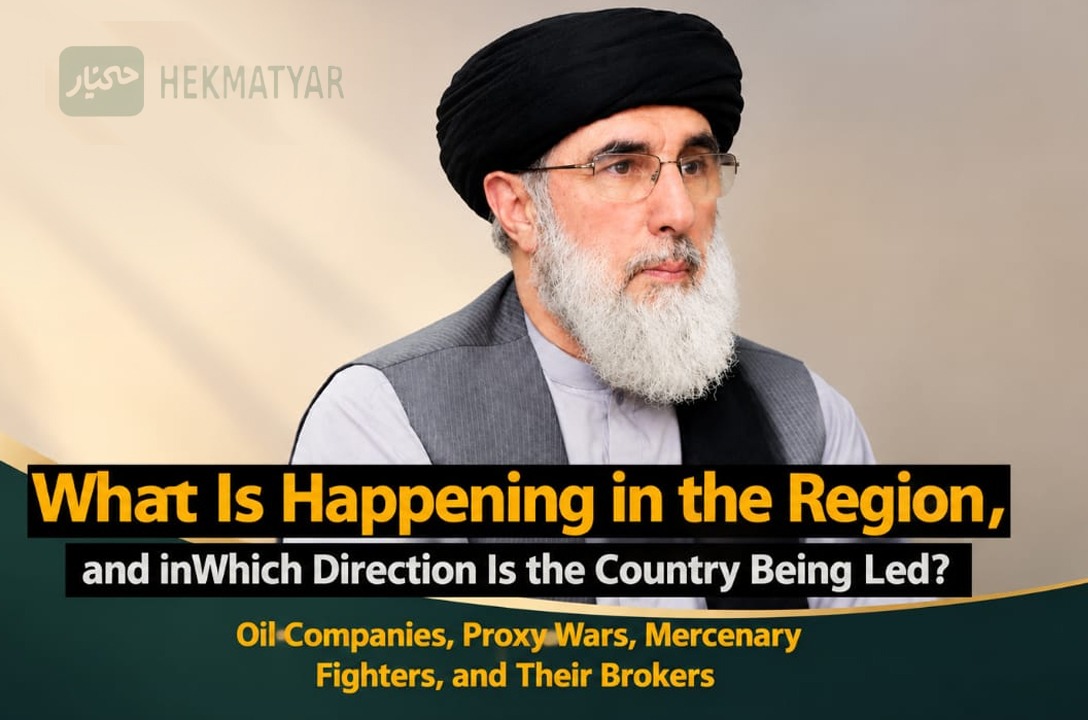
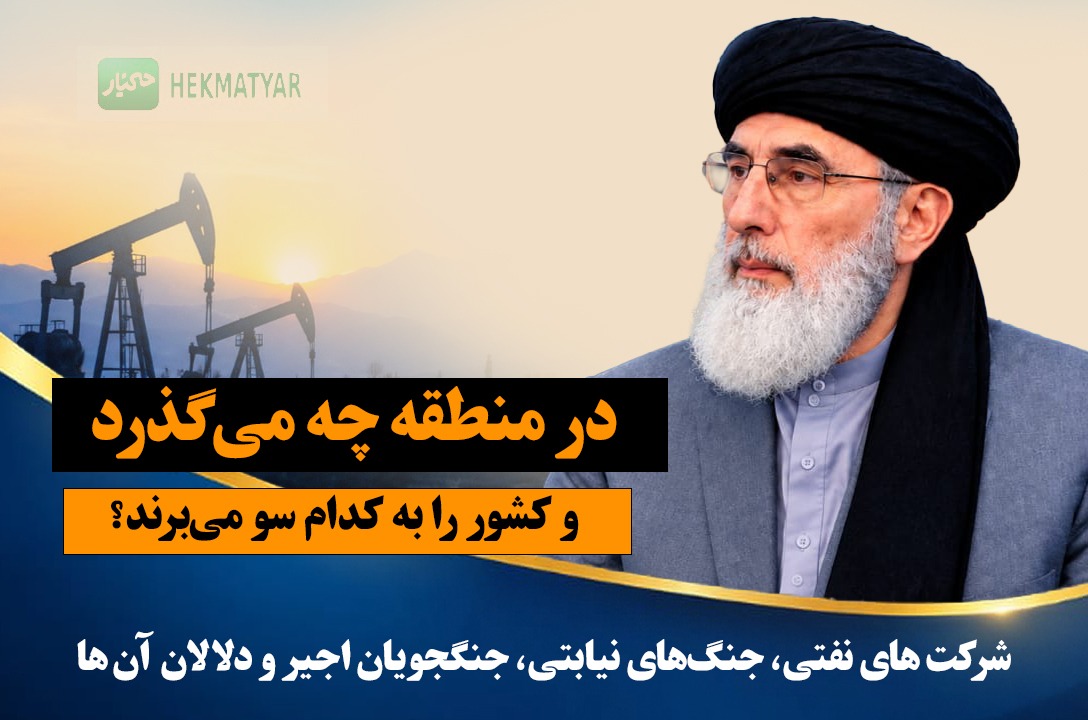
The role of the major colonial powers; the Soviet Union and the United States; and their intelligence networks in Afghanistan’s wars has been exposed and studied to a considerable extent. By contrast, oil companies, proxy wars, mercenary fighters, and the brokers associated with them have received far less media scrutiny, despite the fact that their role was more extensive and consequential than that of many other actors. Their influence was such that, following victory, officials and brokers associated with these very companies were installed in senior positions: one became an ambassador; another became the viceroy of the conquered country, and others became prime minister and president! Power was entrusted to the very groups and mercenary fighters whom these actors had selected and recruited.
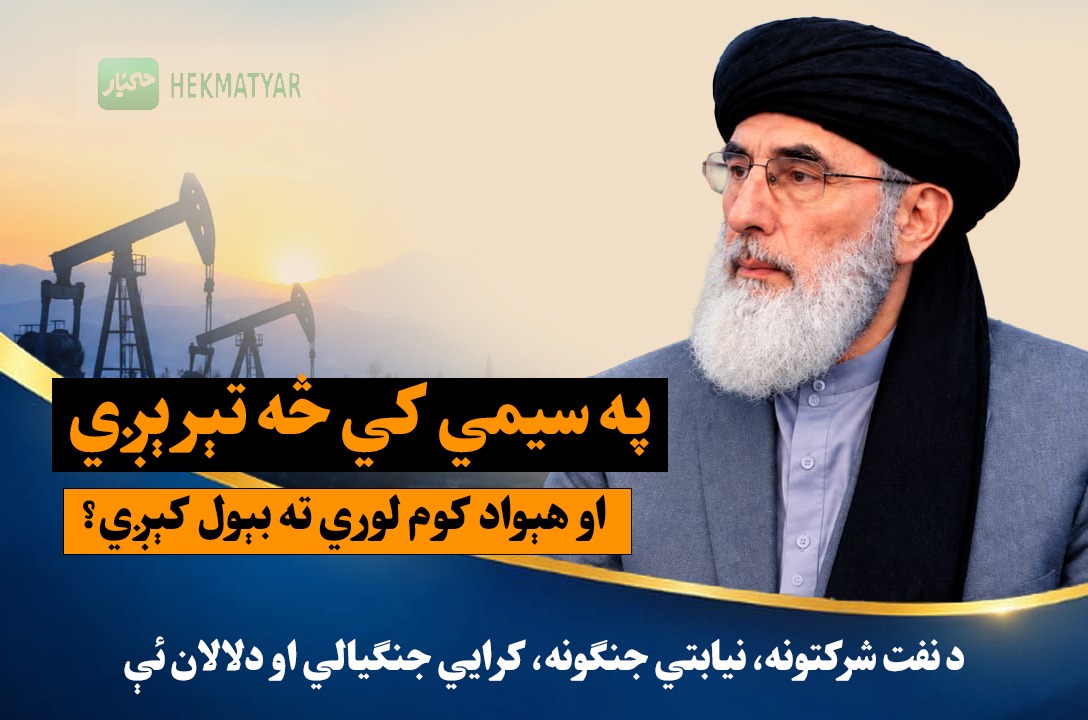
More recently, the Saudi-affiliated company Delta signed a $200 million agreement with the Taliban’s Emirate for the exploration and extraction of oil and gas in the Kushk and Tirpul area. A particularly noteworthy aspect of this agreement was the presence, at meetings concerning it, of a former U.S. ambassador in Kabul and former employee of the American company Unocal, acting as a broker and intermediary. Even more strikingly, Washington announced that he was neither a U.S. official nor a representative of the United States. The Saudi response was likewise one of complete silence and abstention from comment: neither the Saudi ambassador in Kabul nor any other Saudi representative attended the meetings, nor did Saudi Arabia issue any statement either endorsing or rejecting the agreement.
Nevertheless, the comments and praise emanating from the Emirate concerning the scope and benefits of the agreement were extraordinary and charged with enthusiasm and excitement. This is despite the fact that the same authorities witnessed and experienced the consequences of agreements of this kind thirty years ago, during their first period of rule. This is therefore not the initial trial of an unprecedented experiment; rather, it is the repetition of an experiment with a history extending back more than half a century; an experiment that has played a substantial role in Afghanistan’s insecurity and proxy wars. Several examples illustrate this point:
· Fifty-five years ago, toward the end of Zahir Shah’s absolute monarchy, the United States; which held concessions for projects in southern and western Afghanistan; began oil and gas exploration in the area, taking into consideration the importance of its reserves. It constructed the necessary facilities and initiated preliminary operations. However, the serious displeasure of Reza Shah Pahlavi caused the United States to suspend the project before its completion. At that time, Iran served as America’s gendarme in the region and was of even greater importance to the United States than Israel. Iran’s objection arose from the fact that the extraction of oil and gas from the Badghis and Herat areas would have had a significant impact on Iran’s own reserves, given that these areas are contiguous and geographically adjacent.
· Five years later, during the rule of Sardar Daoud, and at a time when the Russians had taken America’s place, they too initiated preliminary exploration and extraction operations in the same area. Circumstances, however, did not favor them, and their work likewise remained incomplete. The coup against Daoud, the failed communist rule that followed, the eventual occupation of Afghanistan, and nearly fourteen years of war provided no opportunity for their affiliated company, Gazprom, to take control of the area.
· With the emergence of proxy groups and the beginning of their proxy wars, major international oil companies such as Unocal and Bridas transferred their commercial rivalry to Afghanistan. Bridas succeeded in recruiting the Jabal al-Siraj alliance. Through Abdul Rahim Ghafoorzai, foreign minister of the coalition government, it sought to persuade the rulers in Kabul to accept an arrangement under which Turkmenistan’s gas and oil would be transported, under Bridas management, through the Badghis–Herat route to Pakistan and India. An undeclared agreement was reached. Gifts, favors, and preliminary financial assistance served their intended purpose.
The agreement, however, did not remain secret for long. American media reported that, in early 1996, Bridas had paid one million dollars to the government of Burhanuddin Rabbani. According to Bridas, the payment constituted assistance for winter fuel. In the U.S. Court of Appeals case *Bridas v. Unocal*, however, the payment was described as having been made in exchange for an agreement granting Bridas the right to construct pipelines across Afghan territory. Other sources disclosed further details of the secret arrangement, reporting that Bridas had offered one million dollars to a well-known member of the Jabal al-Siraj Alliance to create difficulties for the Unocal project and, in the event that Unocal secured the contract, to obstruct construction of the pipeline.
This initial one-million-dollar gift from Bridas had been given to Ghafoorzai, who was serving as foreign minister of the coalition government and was subsequently elevated to the office of prime minister on August 11, 1997. Only ten days after this appointment, however, on August 21, he and his entire team were killed when their aircraft crashed and exploded while returning to Kabul from a visit to Bamiyan. It is said that the incident was a prearranged act of terrorism. An official United Nations document likewise states that Ghafoorzai died in an aircraft accident on August 21, 1997; the aircraft was a Russian Antonov An-32. Media reports further stated that the money had been transferred to Ghafoorzai’s personal bank account in the United States rather than to any governmental bank account in Kabul. There is no doubt that this incident was an assassination and that the intense rivalry among the companies concerned had an impact on it.
· On the other side, America’s Unocal and Saudi Arabia’s Delta established, in 1997, a multinational consortium known as CentGas (Central Asia Gas Pipeline Ltd.) for the transportation of Turkmenistan’s oil and gas. Unocal held the largest share, at 46.5 percent, while Delta held 15 percent. The shares of the other participants; Turkmenistan, Indonesia, Japan, South Korea, and Pakistan; were 7 percent or less each. A 10 percent share had also been envisaged for Russia. This, however, amounted to little more than a joke, since the consortium had essentially been created in opposition to Russia’s Gazprom and with the objective of ending Moscow’s complete domination of Central Asia’s energy reserves. Consequently, Russia soon announced that it would not participate in the consortium. Moscow’s 10 percent share was thereby added to America’s 46 percent, bringing the latter to 56 percent.
Unocal chose the Taliban side, invited a Taliban delegation to the United States, and honored its members with gifts and presents. In fact, Saudi Arabia, the United Arab Emirates, Britain, the United States, and Pakistan all had a hand in the formation of the Taliban movement. The group was formed in Quetta, Pakistan, from among Kandahari Durranis, with the shared British and Saudi objective of restoring Afghanistan’s former monarchical regime and returning the deposed king to power. The Taliban had agreed to this arrangement. It was for this reason that Saudi Arabia, the United Arab Emirates, and Pakistan formally recognized their government.
Delta was confident that all of Turkmenistan’s oil and gas reserves would ultimately fall into their hands. Moscow and Tehran found this situation intolerable and substantially increased their support for Massoud and Rabbani against the Taliban. Every day, several aircraft loaded with Russian weapons, ammunition, and Afghan banknotes printed in Russia would travel through Mashhad to Kulob, from where these supplies would subsequently be transferred to Khwaja Bahauddin in Takhar.
· Now, nearly three decades later, Delta has once again returned to Afghanistan. Its former broker is once again accompanying it, and once again a plan to connect Turkmenistan, Herat, Kandahar, Pakistan, India, and Gwadar is under consideration. The geopolitical continuity and similarity between the present project and the plan pursued during the 1990s are therefore readily apparent.
On September 7, 2026, Afghanistan’s Ministry of Mines and Saudi Arabia’s Delta International signed a contract for the exploration and extraction of oil and gas in the Kushk–Tirpul area of Herat. An initial investment of $200 million was announced, and the former U.S. ambassador in Kabul was present at the signing ceremony. His presence was neither sudden nor accidental. On October 24, 2025, the same former ambassador had attended a meeting with Delta’s CEO, Shaher Al-Taqi, and Abdul Ghani Baradar, during which the exploration and extraction of gas and the construction of a pipeline were explicitly discussed.
Delta’s current plan is not limited to the extraction of Afghanistan’s gas. According to statements by Taliban officials, Delta intends to purchase Turkmen gas through TAPI, increase the production capacity of Turkmenistan’s gas fields, construct a pipeline from Herat to Spin Boldak, extend it through Pakistan to the Indian border, and establish a major gas hub in Gwadar. This is a project of such magnitude that it would require an investment of $50 billion.
How can we believe that this company would have dared to undertake an investment of such magnitude without the authorization and consent of the U.S. and Saudi governments; particularly when the United States does not recognize the government in Kabul and goes even further, stating that the Kabul government supports terrorism and terrorists and that investment in this country benefits terrorists?!
These companies prefer countries that possess neither a principled legal system nor a government enjoying the support of the nation; neither a constitution, nor a representative council, nor a strong and unified central administration. By buying off a handful of powerful figures, they are able to bring the entire government and administration under their control and act as they please. This is precisely what has occurred in the present case: by winning over a few powerful individuals, they have succeeded in securing an agreement that they had previously been unable to obtain through extensive military, political, and financial measures!
We can say with certainty that, as in the past, this agreement will bring prolonged and extensive proxy wars to the Afghan people. The competitors of this company will not remain passive observers with their hands folded. Agreements of this kind can be implemented without major difficulties only when they are concluded with a lawful government established by the will of the people. Governments created and imposed through foreign money and weapons can never legitimately bargain away national assets and resources belonging to the entire nation, nor can they prevent the harmful consequences of such unilateral transactions. Even when an individual sells his own private house to another person, he is, in principle, obliged to take the consent and agreement of his neighbor into consideration.
Yet the situation in Afghanistan today is such that a handful of powerful men from one party can sell the country, its assets, and its resources; at one time to America, at another to Russia and China; at one time to India and at another to Pakistan; at one time to Iran and at another to Saudi Arabia; without consulting the nation and without submitting such major national questions for deliberation before a council representing the people.
It must be recognized that Russia seeks to preserve its dominance and monopoly over Central Asia’s energy export routes and will seek, at any cost, to prevent the gas and oil of these countries from being transported southward through Afghanistan. Iran is an even more determined opponent of this project than Russia and, over the past several decades, has invested more heavily than the Russians in efforts to prevent its implementation. Tehran will not permit the two enormous markets of Pakistan and India to be permanently lost to it.
Delta, Unocal, or any other company can succeed only if such a major national agreement is concluded with a lawful government rather than with a warring faction, and if the contract is awarded through an open competitive bidding process among rival companies; not, as in the past, through bribes and the purchase of a handful of powerful figures. If they imagine that Russia, China, and Iran have been weakened to such an extent that they are now incapable of taking any action against them, this would certainly constitute a grave miscalculation and an unjustified confidence in their own power.
They signed this agreement in Herat, but immediately thereafter the Houthis seized Bab al-Mandab and launched attacks against Saudi Arabia; even a drone attack was launched toward Mecca! Saudi Arabia signed a defense agreement with Türkiye and Pakistan, and Mohammed bin Salman is now traveling to Egypt and will ask it to participate in the ongoing war. Meanwhile, Qatari and Turkish security officials are arriving in Kabul, and it is highly likely that one purpose of their sudden visit will be to seek the Taliban’s cooperation.
It remains unclear whether the Taliban will maintain their previous cooperation with Tehran or alter their former orientation and consider participation in an anti-Iran coalition to be advantageous. Nor is it clear, should they move in that direction, how many Taliban fighters would be sent to Yemen.
The current government in Kabul is the government of a tribal group. It has neither a representative council nor a constitution; its leaders were selected abroad, and Kabul was handed over to them by the United States. At present, it also faces serious internal opposition and armed resistance. If anyone imagines that this government can accomplish a great deal for them, that would constitute yet another grave mistake!
Were the previous failures and bloody experiences not sufficient to prevent the repetition of similar actions?!
Hekmatyar
تبصرې —
تبصرې د څارونکي د تایید وروسته ښکاره کیږي. د تبصرې سمول یې بیا د تایید لپاره راګرځوي.
د بحث کې د ګډون لپاره ننوځئ.
ننوتلستاسو په تمه ګمارنې